
You can spend months feeling run-down, short of breath on a familiar flight of stairs, or strangely unfocused at work, only to be told your routine blood work is normal. When standard tests show normal red blood cell counts, clinicians often rule out iron issues immediately. Yet your body can run desperately low on iron long before your blood cell counts drop below clinical thresholds. This state is known as iron deficiency without anemia, and it affects millions of adults who remain undiagnosed because standard evaluations look at the end result of blood production rather than the reserves that feed it.
Why does this happen? Think of your body like a household managing its finances. When money gets tight, you do not immediately run out of cash in your wallet. Instead, you drain your savings account to keep cash on hand for daily expenses. Until that savings account is completely empty, your checking balance might look acceptable from the outside. Iron deficiency without anemia works the exact same way. Your bone marrow continues building red blood cells by consuming every spare scrap of stored iron, leaving your vital tissues, muscles, and brain starved of an essential mineral.
The difference between active hemoglobin and stored ferritin
To understand why this condition occurs, you must look at how the human body organizes its iron supply. Iron does not float around loosely because unbound iron is chemically reactive and toxic to tissues. Instead, the body binds it to specialized protein carriers. The two most critical proteins to understand are hemoglobin and ferritin.
Hemoglobin is the iron-rich protein packed inside your red blood cells. Its job is immediate and active: it grabs oxygen in your lungs and carries it to your organs, brain, and muscles. If hemoglobin levels fall below reference ranges, typically under 12.0 grams per deciliter for non-pregnant adult women and under 13.5 grams per deciliter for men, you receive a diagnosis of anemia. Hemoglobin represents the working cash in your wallet.
Ferritin, by contrast, is an intracellular protein that acts as your iron warehouse. It stores iron safely inside your liver, spleen, bone marrow, and muscle cells, releasing small amounts into the bloodstream as needed. When you take a ferritin test, the lab measures a tiny fraction of this protein circulating in your serum, which mirrors the total amount of iron tucked away in storage. A normal hemoglobin count simply means you still have enough raw material to build red blood cells today, but it tells you nothing about whether your storage warehouse will run dry tomorrow.
| Feature | Hemoglobin | Ferritin |
|---|---|---|
| Primary role | Transports oxygen to tissues in real time | Stores backup iron inside cells and organs |
| Everyday analogy | The cash available in your wallet | The funds sitting in your savings account |
| Diagnostic threshold | Drops only after iron stores are exhausted | Drops early as iron stores begin to deplete |
| Standard unit of measure | Grams per deciliter (g/dL) | Nanograms per milliliter (ng/mL) |
Why basic complete blood counts miss early iron depletion
Why do routine physical exams miss early iron depletion? The standard screening panel used by most doctors is the Complete Blood Count, or CBC. A CBC counts your platelets, white blood cells, and red blood cells, while measuring hemoglobin and hematocrit, which is the proportion of blood made up of red blood cells. It also checks red cell size, known as mean corpuscular volume, or MCV.
The problem is that your body prioritizes hemoglobin production above almost every other metabolic process. Oxygen delivery is essential for moment-to-moment survival. If your diet lacks iron or your body loses blood slowly over time, your liver quietly releases stored ferritin to supply the bone marrow. The bone marrow keeps churning out normal red blood cells with standard size and hemoglobin content.
A patient can have a ferritin level of 12 nanograms per milliliter, which reflects critically depleted stores, while their hemoglobin sits comfortably at 13.2 grams per deciliter. Because the CBC only measures the end product, the results come back marked as completely normal. The clinician may tell the patient their fatigue is caused by poor sleep, aging, or stress, while the real driver, an empty iron storehouse, remains hidden from view.
Subtle symptoms: restless legs, air hunger, and afternoon fog
What happens when iron stores drop, even if your red blood cells can still carry oxygen? Iron is not just an oxygen transporter; it is also a fundamental cofactor for hundreds of cellular enzymes, including those that produce cellular energy and brain neurotransmitters. When stored iron falls, your muscles and brain experience functional shortfalls long before your blood turns anemic.
- Air hunger and exertional shortness of breath: You might notice that climbing a standard set of stairs leaves you gasping, or you feel the urge to take a deep, satisfying breath that never quite feels complete. This occurs because iron is a building block of myoglobin, an oxygen-binding protein inside muscle fibers. When myoglobin drops, working muscles exhaust their oxygen reserves rapidly, sending distress signals to your respiratory center.
- Restless legs syndrome: Many individuals with low ferritin experience an unbearable crawling, tingling, or pulling sensation in their calves and thighs when resting in the evening. Iron is required by tyrosine hydroxylase, an enzyme that synthesizes dopamine in the brain. Low iron in the central nervous system impairs dopamine signaling, which regulates motor control and creates the classic urge to shake or move the legs at night.
- Afternoon brain fog: Iron is directly involved in mitochondrial energy production through adenosine triphosphate, or ATP, the fuel of living cells. Without adequate iron, the mitochondria in your cerebral cortex struggle to sustain energy output across an eight-hour workday, causing mental exhaustion, slower word recall, and an inability to concentrate by mid-afternoon.
- Cold intolerance and brittle hair: Thyroid peroxidase, an enzyme essential for producing metabolic thyroid hormones, depends on iron. Depleted iron stores can blunt thyroid hormone conversion, leaving people feeling perpetually cold in their hands and feet, alongside noticeable hair shedding and brittle fingernails that split vertically.
Common culprits: menstrual flow changes and reduced stomach acid
How does iron deficiency develop in someone who eats a balanced diet? Iron balance is an equation of intake versus loss. Because the human body has no active biochemical pathway to excrete excess iron, it regulates levels strictly through absorption in the small intestine. When loss accelerates or absorption breaks down, iron stores slowly decay.
For premenopausal women, monthly blood loss through menstruation is the most common driver. A normal menstrual period results in the loss of roughly 30 to 40 milliliters of blood, which equates to about 15 to 20 milligrams of iron. However, conditions such as uterine fibroids, adenomyosis, or copper intrauterine devices can push blood loss above 80 milliliters per cycle. When losses exceed 80 milliliters, dietary intake rarely keeps pace, and the body must draw from stored ferritin every month until the warehouse is empty.
The second major culprit is reduced stomach acid, clinically known as hypochlorhydria. For your body to absorb dietary iron, it must convert ferric iron (Fe3+) into ferrous iron (Fe2+), a chemical transformation that requires an acidic environment in the stomach. Long-term use of proton pump inhibitors or antacid tablets lowers stomach acid and blocks this conversion. Similarly, untreated celiac disease, inflammatory bowel disorders, or a history of gastric bypass surgery damage the mucosal lining of the duodenum, the primary site where iron absorption takes place.
Which specific lab tests to request from your doctor
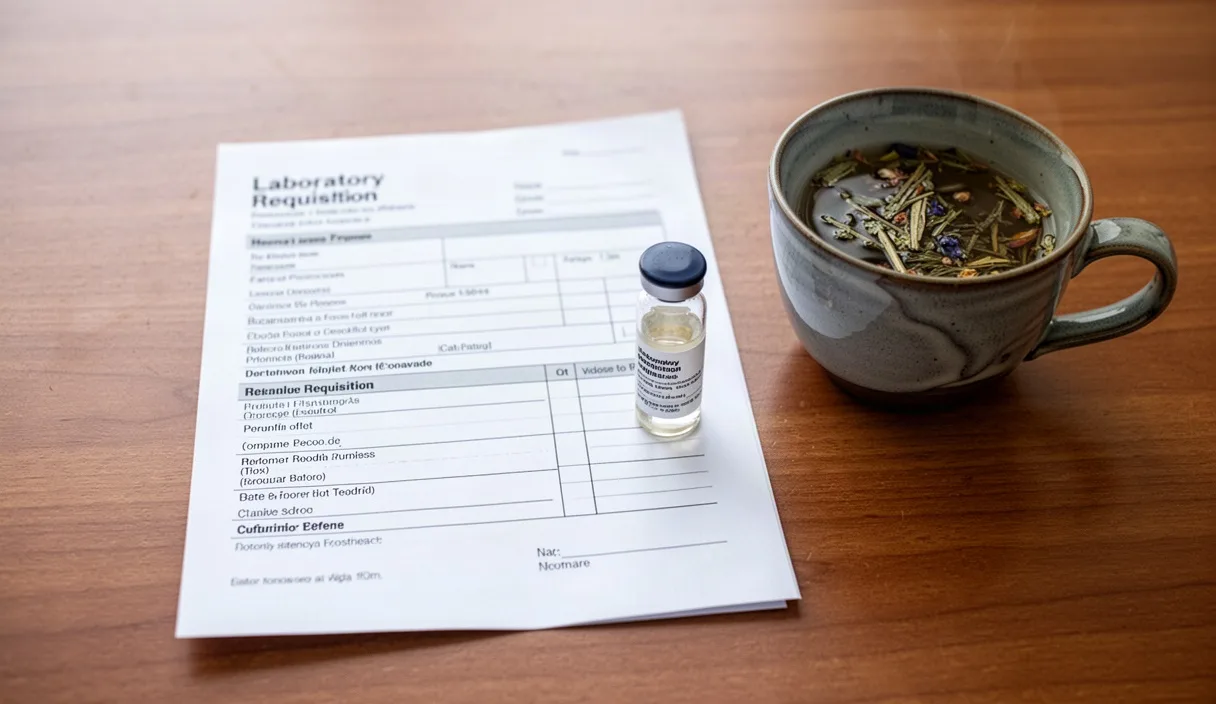
If you suspect low iron without anemia, a basic blood count is insufficient. You need an iron panel that details both circulating levels and reserve capacities. When you speak with your healthcare provider, request a comprehensive assessment that includes these specific tests:
- Serum Ferritin: This is the most crucial marker. While many laboratory reference ranges set the lower limit of normal at 10 or 15 nanograms per milliliter, many clinical guidelines indicate that symptoms of tissue iron deficiency can manifest when ferritin falls below 30 nanograms per milliliter. Values between 30 and 50 nanograms per milliliter may still produce symptoms in sensitive individuals.
- Total Iron Binding Capacity (TIBC): This measures the availability of transferrin, a protein that ferries iron through your blood. When iron stores drop, your liver produces more transferrin to capture every stray atom it can find, causing your TIBC number to rise above the standard reference range.
- Serum Iron: This measures the iron currently circulating in your liquid blood. It fluctuates throughout the day based on your recent meals and is not useful on its own, but it is necessary for calculating saturation.
- Transferrin Saturation Percentage (TSAT): Calculated by dividing serum iron by TIBC, this number shows what proportion of your transport proteins are filled with iron. A TSAT below 20 percent strongly suggests that your tissues are not receiving adequate iron delivery, even if your hemoglobin remains within normal limits.
- C-Reactive Protein (CRP): Ferritin is an acute-phase reactant, which means it artificially spikes in the presence of systemic inflammation, infection, or fatty liver changes. Checking a high-sensitivity CRP alongside ferritin ensures that a normal or high ferritin reading is not masking underlying tissue iron starvation.
Smart food pairings: why vitamin C boosts plant-based iron uptake
Dietary iron exists in two distinct forms: heme iron and non-heme iron. Heme iron comes from animal sources such as beef, poultry, and fish. It is bound within a ring structure that allows it to cross the intestinal wall easily, with absorption rates hovering between 15 and 35 percent. Non-heme iron comes from plant sources such as lentils, spinach, pumpkin seeds, and fortified grains. Its baseline absorption rate is lower, often ranging from 2 to 8 percent.
How do you improve non-heme absorption? Pair non-heme iron with ascorbic acid, better known as vitamin C. Ascorbic acid acts as a reducing agent in the digestive tract. It donates an electron to plant-based ferric iron, converting it into soluble ferrous iron, which easily binds to the transport proteins in your intestinal lining. Adding as little as 50 to 100 milligrams of vitamin C, the amount found in half a bell pepper, a cup of strawberries, or a small glass of fresh citrus juice, can increase non-heme iron uptake three- to fourfold.
Equally important is avoiding dietary blockers during iron-rich meals. Certain compounds bind to iron in the digestive tract, forming insoluble complexes that your body simply excretes:
- Tannins and polyphenols: Found in black tea, green tea, and coffee, these compounds can reduce non-heme iron absorption by more than 60 percent if consumed during or within an hour of your meal.
- Calcium: Calcium competes directly with iron for the same cellular transporter in the intestine. Avoid taking calcium supplements or consuming large amounts of dairy alongside your primary iron-rich meals.
- Phytates: Present in whole grains, beans, and raw nuts, phytates reduce iron uptake. You can lower phytate levels significantly by soaking, sprouting, or fermenting your grains and legumes before cooking them.
Common mistakes
The most frequent mistake people make is buying high-dose over-the-counter iron pills and taking them without a confirmed ferritin test. Iron is an oxidant. Unlike water-soluble vitamins that wash out in urine, excess iron accumulates in the liver, pancreas, and heart. Genetic conditions like hereditary hemochromatosis cause the body to store dangerous amounts of iron, and taking supplements without lab verification can lead to organ damage.
Another common misstep is taking an iron supplement with a morning cup of coffee or a calcium-fortified beverage. The tannins in the coffee and the calcium in the milk bind to the supplement, rendering it largely useless. Finally, many people stop treatment too early. Once you begin taking a supplement under medical supervision, your body uses the initial intake to build new red blood cells. Rebuilding your deep ferritin reserves takes considerably longer, often requiring consistent management for three to six months before storage tanks return to healthy levels.
Practical next steps to discuss with your doctor
If you recognize the symptoms of low iron and your standard blood tests have returned unremarkable, follow these practical steps to address the issue safely with a qualified medical professional.
First, schedule a morning appointment for a fasting blood draw. Ask your physician to order a complete iron panel that includes serum ferritin, total iron binding capacity, and transferrin saturation, along with a high-sensitivity C-reactive protein. Testing early in the morning provides the most consistent baseline for serum iron and transferrin readings.
Second, keep a detailed journal for two weeks tracking your menstrual cycle volume, energy patterns throughout the day, and any physical signs like restless legs or breathlessness. This clinical picture helps your doctor interpret your lab values in context rather than relying solely on arbitrary statistical averages.
Finally, do not self-prescribe supplements while waiting for your appointment. Instead, optimize your daily meals by pairing non-heme iron foods like beans and lentils with sources of vitamin C, and shift your coffee and tea habits to at least ninety minutes away from meals. If your tests confirm low ferritin, work with your healthcare provider to identify the root cause of the depletion and determine the appropriate therapeutic dose, formulation, and monitoring timeline for your body.