
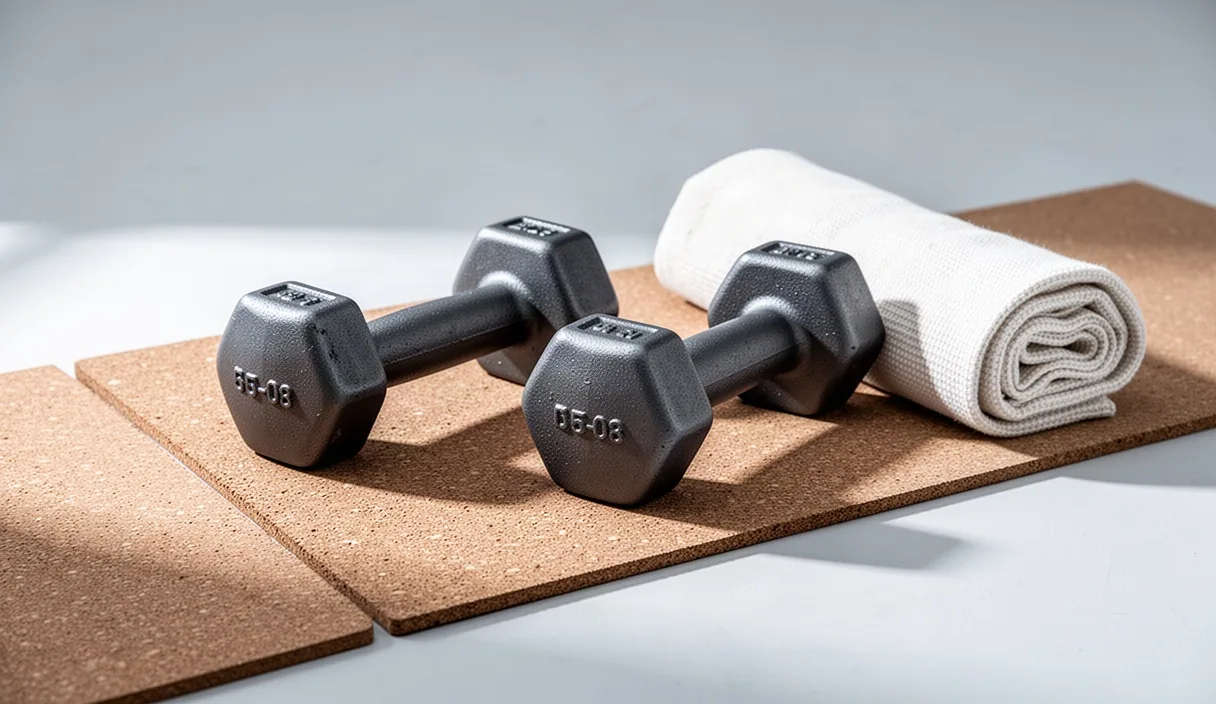

For decades, standard health advice pushed long, steady cardiovascular exercise as the primary answer to aging well. If someone wanted to protect their heart, trim their waistline, or improve their stamina, the immediate prescription was to lace up running shoes, jump on a stationary bicycle, or log hours on an elliptical trainer. While cardiovascular conditioning supports circulatory health, relying on it as your sole movement habit leaves a critical biological system unprotected.
That vulnerable system is your skeletal muscle. As the body enters midlife, our physiological priorities shift. Maintaining muscle tissue and bone density becomes the central buffer against metabolic decline, physical frailty, and joint pain. Cardio trains the heart to pump blood efficiently, but strength training teaches the nervous system, bones, and metabolic tissues how to resist the physical pressures of daily life. Understanding why this trade-off matters requires looking at how human physiology changes across decades.
The biological timeline of natural muscle loss after thirty
What happens to lean tissue as the calendar advances? Starting around age thirty, adults who do not actively perform resistance training begin to lose roughly 3% to 8% of their muscle mass per decade. This involuntary loss of muscle mass, strength, and function is called sarcopenia. After age sixty, the rate of loss often climbs higher, sometimes reaching 12% to 15% per decade. This change does not occur overnight. Instead, it creeps in quietly, like water seeping through a cracked foundation.
In your twenties, your body operates with high baseline levels of growth factors, and muscle repair happens almost automatically, even after poor sleep or sporadic nutrition. Past thirty, the biological balance tips from natural tissue building toward gradual breakdown. Fast-twitch muscle fibers, which are responsible for rapid power production, catching your balance on an icy sidewalk, or sprinting to catch a bus, shrink and disappear much faster than slow-twitch endurance fibers. When fast-twitch fibers atrophy, ordinary tasks begin to feel heavier.
Think of your muscle mass as a retirement savings account. In youth, your account receives automatic deposits simply because of your hormonal environment. After age thirty, those passive contributions end. Every single withdrawal, whether caused by illness, prolonged bed rest, or sedentary weeks at a desk, reduces your principal balance. Strength training is the only direct mechanism available to deposit new capital into that physical savings account.
Cardiovascular exercise, like brisk walking or cycling, burns calories and stimulates the lungs, but it provides insufficient mechanical tension to stop this muscle decline. A pedestrian can walk ten thousand steps a day and still experience progressive sarcopenia in the upper body and hip stabilizers. Without deliberate overload, your body sheds unused muscle tissue because lean mass demands significant calories to maintain.
Why excessive endurance cardio can elevate baseline stress hormones
Can too much cardio actually work against your health goals? In moderate amounts, endurance training supports mitochondrial health, the tiny energy factories inside cells. However, when middle-aged adults lean on repeated, prolonged cardio sessions lasting forty-five to ninety minutes to manage weight, the body often interprets that constant demand as chronic physical stress.
Endurance work requires sustained output, which prompts the adrenal glands to secrete daily balance, our primary stress hormone. daily balance is not inherently harmful. It helps mobilize fuel by breaking down stored carbohydrates and fats when you need energy. Yet problems emerge when daily balance remains elevated for hours after a workout because of insufficient recovery, accumulated joint inflammation, and restricted food intake.
When baseline daily balance stays high, it creates a catabolic environment, meaning the body prefers to break down complex tissues into simple fuels. Under prolonged stress signals, the body can break down amino acids from muscle tissue to produce glucose, a process called gluconeogenesis. In essence, performing excessive endurance exercise without proper fuel or recovery can encourage your body to consume its own lean tissue to keep running.
Consider an automobile engine running at high revolutions for hours on end without fresh oil. The engine heats up, mechanical components wear down, and fuel efficiency drops. Strength training, by contrast, operates more like a series of brief, controlled tests. You work intensely for thirty to forty-five seconds, and then you rest completely for two minutes. This stop-and-start pattern signals the body to adapt by reinforcing tissue rather than breaking it down for emergency fuel.
How skeletal muscle acts as a storage tank for circulating blood sugar
Where does the sugar from your meals go after entering the bloodstream? Most people assume the liver handles all glucose regulation. In reality, skeletal muscle absorbs approximately 70% to 80% of circulating blood glucose after a meal. Muscle acts as a massive metabolic sink, soaking up glucose and storing it as intracellular glycogen for future physical work.
When you consume carbohydrates, your digestive system breaks them down into glucose, triggering the pancreas to produce insulin. Insulin acts like a key, unlocking cellular gates known as GLUT4 transporters. These transporter proteins move to the outer surface of muscle cells to let glucose enter. If your muscle mass is small, or if muscle fibers are inactive and clogged with lipid droplets, the cellular locks stop responding. This condition is insulin resistance, the primary driver of type 2 metabolic balance.
Strength training changes this mechanism through two distinct paths:
- Insulin-dependent clearance: Lifting weights creates microscopic demands that empty out stored glycogen reserves. When muscles have empty storage space, they respond far more willingly to insulin, clearing sugar from the bloodstream with lower insulin output.
- Contraction-mediated clearance: When a muscle contracts forcefully against resistance, it moves GLUT4 transporters to the cell surface directly, completely independent of insulin. That means even individuals with impaired insulin signaling can clear blood sugar simply by contracting their muscles against a load.
A person with more muscle mass possesses a larger fuel tank. If you drink a glass of fruit juice with minimal muscle mass, that sugar enters the blood quickly, encounters a small storage depot, and forces the liver to convert the excess into circulating triglycerides. If you have substantial, well-trained muscle mass, that same influx of glucose enters your cells cleanly, replenishing depleted glycogen reserves without stressing your metabolic system.
Bone remodeling: how mechanical load prompts mineral retention
Bones seem rigid and permanent, like porcelain, but they are living, dynamic structures that rebuild themselves continuously. Two main cell types govern this balance: osteoclasts, which clear out old and damaged bone tissue, and osteoblasts, which lay down fresh mineral structures. This continuous recycling loop is called bone remodeling.
How does bone know when to get stronger? It responds to physical pressure through a phenomenon called the piezoelectric effect. When you place a heavy physical load along the length of a bone, the crystalline structure of the mineral matrix bends on a microscopic scale. This minute bend generates a tiny electrical charge. Specialized sensor cells embedded inside the bone, called osteocytes, detect this electrical signal and mechanical strain, alerting osteoblasts to reinforce that specific section with calcium, phosphorus, and collagen.
Walking and swimming, while gentle on the joints, fail to provide the directional strain needed to stimulate meaningful bone remodeling in the hips, spine, and wrists. Those bones require loads that exceed daily walking patterns to trigger an osteogenic, or bone-building, response.
| Activity Type | Primary Load Mechanism | Bone Density Signal | Primary Joint Impact |
|---|---|---|---|
| Lap Swimming | Fluid resistance (buoyancy) | Low to negligible | Low compressive impact |
| Brisk Walking | Ground reaction force (1x body weight) | Low to maintenance level | Repetitive low impact |
| Road Running | Impact forces (2.5x to 3x body weight) | Moderate (lower limbs only) | High repetitive impact |
| Barbell or Dumbbell Squat | Axial compressive load (variable tension) | High (femur, pelvis, spine) | Controlled compressive load |
As shown in the table, high-impact running creates bone strain, but it does so through thousands of repetitive impacts that can irritate aging cartilage. Strength training allows you to place high mechanical tension across your skeleton under controlled, slow-speed conditions, prompting mineral retention without jarring the joint surfaces.
Structuring a two-day weekly strength plan with basic movement patterns
Building meaningful strength does not require living in a gym. For busy adults, two focused sessions per week, lasting thirty to forty-five minutes each, provide an exceptional stimulus for preserving muscle and bone. The secret lies in organizing your training around basic human movement patterns rather than isolating small muscles like the biceps or calves.
A balanced plan covers five fundamental movements across each session:
- The Knee-Dominant Movement (Squat pattern): Works the quadriceps, glutes, and hips. Examples include the goblet squat with a dumbbell held at the chest, or a box squat where you sit back under control onto a chair before standing up.
- The Hip-Dominant Movement (Hinge pattern): Strengthens the posterior chain, including hamstrings, glutes, and lower back. Examples include Romanian deadlifts with dumbbells or glute bridges from the floor.
- The Upper-Body Press: Strengthens the chest, shoulders, and triceps. Examples include push-ups with hands elevated on a bench, or seated dumbbell overhead presses.
- The Upper-Body Pull: Targets the upper back, latissimus dorsi, and posture muscles. Examples include single-arm dumbbell rows supported on a bench, or resistance band rows pulled toward the ribs.
- The Loaded Carry or Trunk Brace: Trains core stability and grip strength. Examples include carrying a heavy kettlebell in one hand for forty paces (suitcase carry), or holding a thirty-second forearm plank.
To execute this plan, schedule two non-consecutive days, such as Tuesday and Friday. In each session, pick one exercise from each pattern. Perform two to three sets of eight to twelve repetitions for each movement. Select a weight where the tenth or eleventh repetition feels genuinely challenging, but can still be completed with clean, upright posture. Rest sixty to ninety seconds between sets to allow energy stores inside the muscle cells to regenerate.
How to measure progress without relying solely on bathroom scale weight
The standard bathroom scale provides an incomplete picture of physical change. A scale cannot distinguish between a pound of water, a pound of visceral fat, or a pound of functional muscle tissue. In fact, an adult who begins a strength program might lose four pounds of body fat while gaining four pounds of muscle. The scale reads unchanged, yet their metabolic rate, posture, and physical capacity have altered dramatically.
Instead of judging your health by your total mass, track functional and dimensional metrics that reflect actual tissue adaptation:
- The Training Log: Record the weight used, the repetitions achieved, and the sets completed in every session. If you pressed twenty-pound dumbbells for eight reps in week one, and you can press them for eleven reps in week four, your nervous system and muscle fibers have adapted, regardless of what the bathroom scale reports.
- Waist-to-Hip Ratio: Use a simple cloth tape measure once per month. Measure the narrowest point of your waist and the widest point of your hips. When muscle mass increases and abdominal fat declines, your waist measurement drops even if your overall scale weight stays level.
- Grip Strength and Floor Rise Capacity: Notice how easily you can open stubborn jars, carry heavy bags of soil, or rise from the living room floor without pushing off your knees. These physical markers directly correlate with lower risks of all-cause mortality and joint degeneration.
Common mistakes to avoid
When starting a resistance routine, enthusiasm often leads to predictable errors that derail consistency. One frequent mistake is treating strength sessions like high-intensity interval training. Rushing from exercise to exercise with zero rest turns a strength workout into a disguised cardio session, reducing the amount of weight you can lift and limiting the mechanical tension your bones receive.
Another error is lifting weights that are far too light. Using tiny two-pound hand weights for fifty repetitions does not trigger the mechanical strain required for bone remodeling or fast-twitch muscle activation. While you must prioritize flawless form, the load must feel heavy enough to make the final few repetitions demand serious concentration.
Finally, do not skip progressive overload. Progressive overload simply means asking your muscles to do slightly more over time. If you use the exact same ten-pound weight for the exact same ten repetitions for six months, your body adapts completely and ceases to build new bone or muscle tissue. Once an exercise feels manageable, increase the load slightly or add two repetitions.
Next steps for lasting joint and metabolic health
Shifting your movement focus from hours of cardio to structured strength training requires patience and consistency. If you have been inactive, have existing joint concerns, or manage a chronic condition, consult your physician or work with a licensed physical therapist before beginning an aggressive lifting routine.
Start simply this week. Find a pair of moderate-weight dumbbells or visit a gym to test your baseline comfort with basic movements. Commit to just two thirty-minute sessions per week, keep a small notebook to log your weights, and prioritize adequate protein intake to support tissue recovery. By giving your skeletal system the mechanical load it requires, you ensure that your body remains capable, resilient, and metabolically healthy for decades ahead.